18 May 2026 Issue 350 - The New Geometry of Global Balance
|
|
|
|---|
|
| India and Africa are Joined at the Hip in the Rise of the Global South |
|
|
|---|
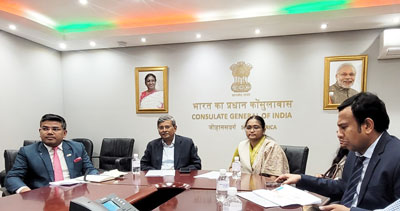
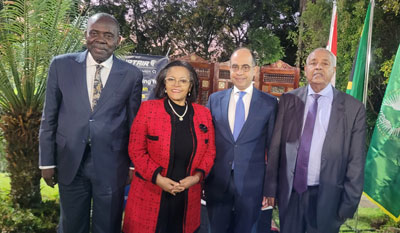
Pictured (l-r) Acting Indian Consul General Harish Kumar, Indian High Commissioner Prabhat Kumar, Deputy Banu Prakash and first secretary Shyam Chand, (photo: TDS) |
|
|---|
The forthcoming fourth edition of the India–Africa Forum Summit IV (IAFS IV), scheduled to take place in New Delhi from 28–31 May 2026 in collaboration with the African Union Commission, arrives at a defining historical moment for both Africa and India. After an eleven-year hiatus shaped by geopolitical instability, shifting global alliances, and the disruptive aftershocks of the COVID-19 pandemic, the summit is a strategic convergence of two of the most dynamic forces of the Global South. Under the theme “India-Africa Spirit: India-Africa Strategic Partnership for Innovation, Resilience and Inclusive Transformation,” the summit captures the emerging confidence of regions once constrained by colonial subjugation but now increasingly determined to shape the future international order on their own terms.
|
|
|---|
|
| Courtney House International learners recognised among the world's best |
|
|
|---|
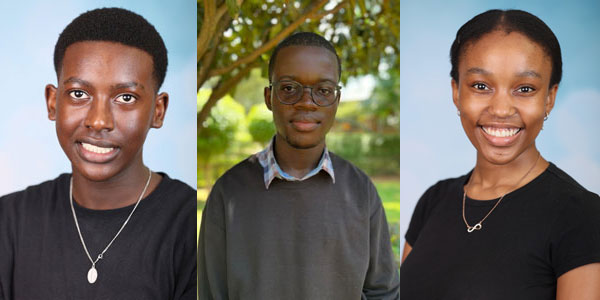
Pictured (l-r) Alvin Munanda, Terry Mabuni and Camilla Moeletsi |
|
|---|
In an era of rapid global change, there has never been a more exciting time to be a young person with the knowledge, skills and ambition to meet the world on itown terms. At Courtney House International School, that promise is not left to chance, it is built – deliberately and measurably – into everything the school does. And the results speak for themselves.
Three learners from the school have been named recipients of Outstanding Cambridge Learner Awards for 2025 – amongst the most rigorous and internationally respected forms of academic recognition available to school-aged learners anywhere in the world. Administered by Cambridge International Education across more than 160 countries and 10 000 schools, the awards identify exceptional performance in Cambridge IGCSE and Advanced Level examinations. To receive one is to be placed amongst a small cohort of high achievers on a global stage, young people whose performance has been measured not against a local or national benchmark, but against the full breadth of international academic endeavour. A total of four awards were awarded to the school by Cambridge International Education. Anthony Edwards, Curriculum Executive, Curro, said: ‘These achievements reflect far more than academic ability alone. They are the result of curiosity, discipline, perseverance and a genuine commitment to learning – qualities that have earned our learner’s recognition on the global stage.’
|
|
|---|
|
Africa, China, USA and the New Geometry of Global Balance |
|
|
|---|
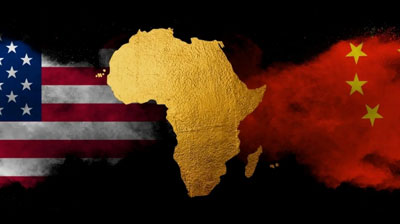
The contemporary international system is undergoing a quiet but decisive reconfiguration. It is not marked by the sudden collapse of an old order, but by the gradual emergence of overlapping centres of power, competing economic logics, and increasingly interdependent strategic choices. Within this shifting geometry, Africa is no longer a peripheral stage upon which global rivalries are enacted. It is becoming an active node in the design of global balance itself. Recent diplomatic and economic developments reference this transition with unusual clarity. On one hand, high-level engagements between the United States and the People’s Republic of China, accompanied by prominent business delegations, have reaffirmed the complexity of their strategic interdependence, even amid persistent tensions over issues such as Taiwan, technology governance and global supply chains. On the other hand, China’s rollout of a sweeping tariff-free regime for African exports signals a deepening structural realignment in global trade architecture, one that directly intersects with Africa’s own integration agenda under the African Continental Free Trade Area (AfCFTA). |
|
|---|
| United States, Mexico and Canada Celebrate Bafana Bafana Ahead of FIFA World Cup |
|
|
|---|
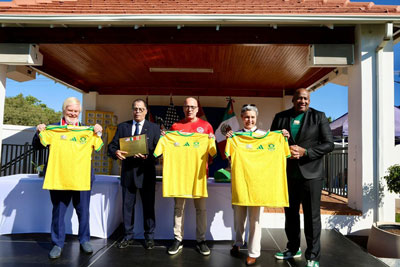
(l-r) U.S. Ambassador L. Brent Bozell III, SAFA President Danny Jordaan, Canadian High Commissioner James Christoff, Mexican Ambassador Sara Valdés and South African Minister of Sports, Arts and Culture Gayton McKenzie (photo: US Embassy in SA)
|
|
|---|
U.S. Ambassador L. Brent Bozell III, Mexican Ambassador Sara Valdés, and Canadian High Commissioner James Christoff co-hosted a reception in honor of South Africa’s national football team, Bafana Bafana, as it prepares for the FIFA World Cup.
The event brought together the South African Football Association, past Bafana Bafana players, South African government officials including Minister of Sports, Arts and Culture Gayton McKenzie, and members of the diplomatic community to celebrate the team’s World Cup participation and to demonstrate trilateral North American international cooperation. “Sports bring the world together like nothing else, and today proves it,” said Ambassador Bozell. “Three North American missions united here in Pretoria to celebrate South African football. When Bafana Bafana takes the field, millions of citizens from our four countries and beyond will be watching and cheering.” |
|
|---|
| | Victory Day Remembered Amid a World Still at War |
|
|
|---|
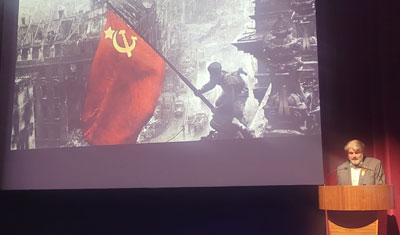
Ambassador Roman Ambarov addressing guests at the commemoration of Victory Day in Pretoria, South Africa (photo: TDS) |
|
|---|
Eighty-one years after the guns of the Second World War fell silent across Europe, the lessons of that conflict remain deeply relevant in a world once again marked by growing geopolitical tension, military confrontation and ideological division. On the night of 8 May 1945, at 23:01, Wilhelm Keitel signed Nazi Germany’s unconditional surrender, formally bringing the war in Europe to an end. Due to the time difference, it was already 9 May in Moscow, a date that has since become known across Russia and much of the former Soviet Union as Victory Day. That historic moment was commemorated in Pretoria this week, where the Russian Embassy hosted a Victory Day event reflecting on the sacrifices made during what Russia refers to as the Great Patriotic War. The evening included the screening of the film 'Invincible', based on the real-life story of Soviet tank commander Semyon Konovalov and his KV-1 crew, who destroyed multiple German armoured units during fierce fighting in the Rostov region. While the film highlighted battlefield courage, the broader message of the evening focused on the devastating human cost of war. In his address, Ambassador of the Russian Federation, Roman Ambarov described the Soviet Union’s role in defeating Nazi Germany as decisive in ending fascism and restoring peace to Europe. He noted the enormous sacrifice made by the Soviet people between 1941 and 1945, with an estimated 27 million lives lost and thousands of cities and villages destroyed.
|
|
|---|
| Positioning Africa to Lead a New Global Economy - Alamein Africa Forum |
|
|
|---|
Pictured (l-r) Ambassador of the Central African Republic and Dean of the African Diplomatic Corps Andre Nzapayeke, CEO of AUDA-NEPAD Nardos Bekele-Thomas, Ambassador of Egypt Ahmad Sharief and Ambassador of Eritrea and Dean of the Diplomatic Corps. Salih Omar Abdu (photo: TDS) |
|
|---|
At a pivotal moment for the African continent and the wider global economy, an important diplomatic and economic engagement hosted at Egypt House in Pretoria placed Africa’s future squarely at the centre of international discourse. Convened by Ambassador of Egypt Ahmad Sharief, the reception titled 'African Opportunity and Partnership: In Promotion of the Alamein Africa Forum' introduced the vision and ambition behind the inaugural Alamein Africa Forum GO63, to be held in El Alamein from 25–27 June 2026 alongside the 2026 African Union Mid-Year Summit. The promotional event reflected a broader continental shift that Africa is an emerging centre of global economic direction, innovation and strategic leadership. The Alamein Africa Forum GO63 is designed as Africa’s premier “implementation-first” business forum platform where policy, finance and private sector leadership converge to accelerate the goals of Agenda 2063. Co-organised by the Government of Egypt, African Export-Import Bank, the African Union Commission and African Union Development Agency – NEPAD, the forum aims to move beyond declarations toward measurable implementation, investment mobilisation and continental integration. In his welcoming remarks, Ambassador Sharief stated the urgency of transforming African aspirations into coordinated action. He stressed that the forum seeks to shift discourse from rhetoric to delivery, from policy statements to executable projects capable of reshaping the continent’s economic trajectory. |
|
|---|
Africa and Japan, Symbiotic in a Changing World
|
|
|
|---|
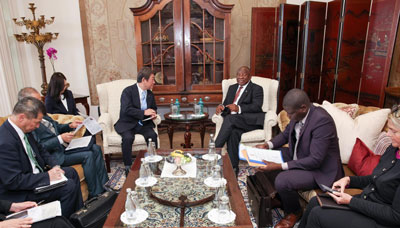
President Cyril Ramaphosa and Minister Ronald Lamola engaging with Japanese Foreign Minister Toshimitsu Motegi and his delegation during a courtesy visit to the Presidency (photo: GCIS) |
|
|---|
The recent four-nation African tour by Japanese Foreign Minister Toshimitsu Motegi which included Kenya, Angola, Zambia and South Africa was far more than a diplomatic courtesy visit. It was a strategic recognition that the future of the global economy, industrial production, energy security and technological advancement is increasingly intertwined with the rise of Africa. At a moment when the international system is undergoing profound realignment, Japan’s renewed engagement with Africa reflects a growing understanding in Tokyo that the continent is no longer a peripheral player in global affairs, but rather one of the defining centres of future growth, innovation and geopolitical relevance. The visit also arrives during a significant political transition in Japan itself. Under the leadership of Prime Minister Sanae Takeshi, Japan’s first female Prime Minister, the country appears to be recalibrating its domestic and international posture with greater dynamism and strategic clarity. Her attendance at the G20 Johannesburg Summit and support for outcomes emphasizing inclusive growth, development reform and Global South cooperation signalled a Japan seeking renewed relevance and influence on the world stage. |
|
|---|
Angela Yeung's Appointment Herald's a Dynamic New Era for Hong Kong-South Africa Relations
|
|
|
|---|
The appointment of Angela Yeung as President of the Hong Kong South Africa Chamber of Commerce (HKSACC) marks an important and timely development in strengthening commercial, diplomatic and cultural relations between Hong Kong, Greater China and Southern Africa. Announced in Johannesburg, effective from 10 May 2026, Yeung’s appointment comes at a pivotal moment in global trade relations, where deeper cooperation, strategic investment partnerships and people-to-people engagement are becoming increasingly important in navigating a rapidly evolving international economic landscape. An award-winning entrepreneur, international speaker, mountaineer and founder of the Impilo Collection, Angela Yeung brings to the Chamber a unique combination of resilience, visionary leadership, international business acumen and social consciousness. Her remarkable achievement in 2025 of summiting Mount Everest via the technically demanding North Side route demonstrated not only extraordinary endurance and determination, but also the courage and strategic focus that define effective leadership. |
|
|---|
Moonwalking on Tippy Toes - Heal the World Dances Through Memory, Liberation and Hope
|
|
|
|---|
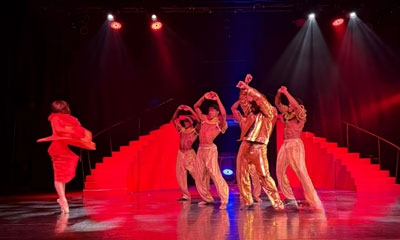
Mzansi Ballet has delivered a production that is not merely entertainment, but an act of emotional restoration. Heal the World, now showing at the Pieter Toerien Theatre, is a stirring fusion of classical ballet and contemporary dance that captures the enduring spirit of Michael Jackson while reflecting deeper social and historical currents that continue to shape both South Africa and the United States. When introducing the production, director Dirk Badenhorst explained that 'Heal the World' is not a biography of Michael Jackson, but rather an exploration of the genius, symbolism and emotional resonance behind his music and movement. That distinction is important, because this ballet succeeds precisely by reaching beyond imitation. Instead of recreating the King of Pop, it channels the universal humanity embedded in his artistry. For many South Africans who grew up during the late 1970s and 1980s, the sounds of Motown and the electrifying energy of the Jackson 5 offered something more profound than popular music. In the midst of apartheid repression and revolutionary struggle, American soul, rhythm and blues became a source of comfort, solidarity and aspiration. Michael Jackson’s extraordinary rise mirrored many of the tensions shaping Black identity and resistance globally. His experience of racial prejudice in America resonated deeply with South Africans confronting institutionalised discrimination under apartheid, forging a cultural bridge between the liberation struggle in South Africa and the Civil Rights Movement in the United States. |
|
|---|
|
|