

Beyond Protocol, The Rise of Network Diplomacy
By Kirtan Bhana
27 July 2026
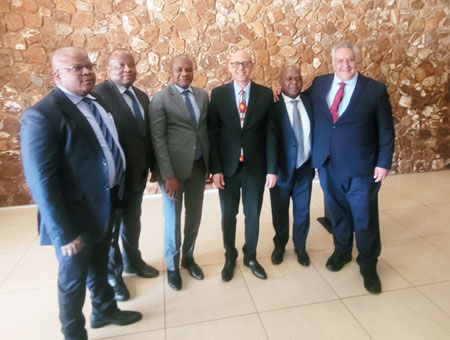
The launch of the Pan African Hellenic Cypriot Chamber of Commerce, Industry, Professionalism and Entrepreneurs NPC in Pretoria may, at first glance, appear to be the establishment of another business chamber. In reality, it is emblematic of a profound transformation taking place in international relations, one in which diplomacy is increasingly driven not only by governments, but by networks of business leaders, professionals, diaspora communities, academia and civil society.
The world is entering a new era.
For centuries, diplomacy was the exclusive preserve of nation states. Ambassadors negotiated treaties, governments managed alliances, and embassies served as the principal conduits of international engagement. While these institutions remain indispensable, they are no longer the sole architects of global cooperation.
Today's diplomatic ecosystem is far broader, more dynamic and infinitely more interconnected. International influence now flows through chambers of commerce, investment forums, universities, technology hubs, professional associations, cultural institutions, development agencies and diaspora organisations. These interconnected relationships are creating what may best be described as Network Diplomacy, a model of international engagement where governments remain central, but prosperity is increasingly built through trusted partnerships across multiple sectors of society.
It was against this backdrop that Founding President Mr Constantinos Tsouroulis articulated the philosophy underpinning the newly established Chamber. "It is its people that are one of the greatest assets any nation possesses."
The statement appears deceptively simple, yet it captures one of the defining realities of our age. Beyond manufacturing, beyond financial markets and even beyond national borders, it is people who create opportunity. Entrepreneurs establish enterprises. Medical professionals improve public health. Academics educate future generations. Engineers design infrastructure. Innovators develop new technologies. Investors mobilise capital. Community leaders cultivate trust.
Ultimately, nations compete not only through economic strength, but through human capability. The Chamber's vision therefore begins not with commerce, but with people.
That philosophy was also reflected in the Chamber's acknowledgement of the outgoing High Commissioner of Cyprus to South Africa, Mr Antonis Mandritis, whose nearly five-year tenure was recognised for its leadership, friendship and unwavering support of the initiative.
Such recognition illustrates another important reality.
Diplomatic success is no longer measured solely by official communiqués or bilateral agreements. Increasingly, it is reflected in the relationships that diplomats help cultivate, relationships that continue generating economic, cultural and professional cooperation long after official ceremonies have concluded.
Modern diplomacy succeeds when it empowers others to build.
One of the most striking aspects of the Chamber is its deliberately Pan-African identity. Its comprehensive name is intentional rather than ceremonial. It reflects an ambition that transcends geography. As Tsouroulis explained, the Chamber does not exist solely for Cyprus, Greece or South Africa. "It belongs to everyone who believes cooperation creates greater opportunity than isolation."
Those words may well describe the emerging philosophy of international relations itself. Across the Global South, new forms of cooperation are reshaping the global economy. The expansion of BRICS, the implementation of the African Continental Free Trade Area (AfCFTA), new transport corridors, digital connectivity, regional value chains and growing South-South partnerships all point towards an increasingly multipolar world where collaboration is replacing dependency and partnership is becoming the preferred currency of international engagement.
Within this evolving environment, diaspora communities are assuming unprecedented strategic importance. For generations, Hellenic and Cypriot communities have contributed to the development of African economies as entrepreneurs, industrialists, educators, farmers, professionals and community leaders. They have remained loyal citizens of the countries they call home while preserving enduring connections with their ancestral heritage.
Their experience illustrates why diaspora communities should no longer be viewed merely as expatriate populations. They are strategic assets.
As Tsouroulis observed, they strengthen diplomacy, facilitate the transfer of knowledge and skills, expand access to international markets and unlock new trade opportunities.
Perhaps more importantly, they build trust. Trust is increasingly recognised as the world's most valuable diplomatic currency. Investment follows trust. Innovation follows trust. Partnerships endure because of trust.
Diaspora communities possess something that institutions often struggle to create, they understand multiple cultures simultaneously and are therefore uniquely positioned to translate opportunity into practical cooperation. The Chamber's Pan-African outlook recognises this reality.
It seeks not merely to facilitate business networking, but to create an ecosystem where governments, diplomatic missions, entrepreneurs, investors, professionals and educational institutions collaborate in pursuit of shared prosperity. This reflects the future of economic diplomacy.
Africa itself is entering one of the most consequential periods in its modern history. Its abundant natural resources, expanding manufacturing capability, agricultural potential, strategic minerals, growing urban centres and extraordinary demographic dividend position the continent to become one of the defining economic growth regions of the twenty-first century.
Its greatest resource, however, remains its people. Africa's youthful population represents not merely a labour force, but a generation of entrepreneurs, innovators, researchers and creators capable of redefining global value chains.
The challenge is no longer whether Africa possesses opportunity. The challenge is creating the networks capable of unlocking it. This is where countries such as Cyprus offer unique strategic value.
Situated at the crossroads of Africa, Europe and the Middle East, Cyprus has historically served as a bridge between continents and civilizations. Today, it combines political stability, a respected legal framework, sophisticated financial services, maritime expertise and access to European markets.
Rather than competing with Africa's development aspirations, Cyprus complements them. Such complementarities increasingly define successful international partnerships. The future belongs less to transactional relationships than to ecosystems of cooperation.
Diplomacy itself is therefore undergoing a quiet but profound evolution.
The diplomat of the future must be equally comfortable engaging with entrepreneurs as with ministers, universities as with government departments, technology innovators as with traditional industries, development finance institutions as with cultural organisations.
Protocol remains important.
But purpose has become indispensable. Influence increasingly depends upon convening capability—the ability to bring together diverse stakeholders around shared interests and transform dialogue into measurable outcomes. In many respects, this evolution has been unfolding quietly for decades.
Long before terms such as economic diplomacy, public diplomacy, diaspora diplomacy and whole-of-society engagement became widely adopted, practitioners across diplomatic, commercial and media circles were already recognising that international relations extended well beyond embassy walls.
For nearly three decades, The Diplomatic Society has chronicled, convened and contributed to this expanding conversation. It has consistently argued that diplomacy is not confined to official protocol but is equally expressed through trade, investment, tourism, education, cultural exchange, innovation and the countless relationships that connect societies across borders. The growing prominence of these themes in global policy reflects not a departure from diplomacy's traditions, but their natural evolution.
The establishment of the Pan African Hellenic Cypriot Chamber should therefore be viewed as evidence of a broader international realignment. The boundaries separating diplomacy from commerce are becoming increasingly porous. Economic development is becoming a central objective of foreign policy. Diaspora communities are being recognised as strategic partners in national development. Professional expertise is becoming a diplomatic asset. Business chambers are evolving into platforms for international cooperation. Media is becoming a facilitator of dialogue rather than merely an observer of it.
It is the diplomacy of an interconnected, multipolar and opportunity-driven world.
The countries and institutions that prosper in this new dispensation will not necessarily be those with the greatest military or economic power, but those capable of building the strongest networks of trust.
For in the final analysis, diplomacy has never been solely about governments, it has always been about people.
The difference today is that the world is finally beginning to recognise that its greatest diplomatic resource is not found within the walls of foreign ministries, but within the relationships that individuals, communities and institutions build across borders every day.
The launch of the Pan African Hellenic Cypriot Chamber is one more bridge across those borders. Its true significance lies in the partnerships it has the potential to inspire, and in the future it may help shape.